- Jan 22, 2025
BenQ PianoLight Grand Review
- Joseph @ Flex Lessons
- Reviews
In this article, I will be reviewing the BenQ PianoLight Grand. I already own the previous version of the PianoLight, which was intended to be used with upright pianos. I have enjoyed using this previous iteration of the PianoLight reliably for several years.
However, since I now use a grand piano in my studio, I have been in need of a solid grand piano lamp. While I am sure there are plenty of good options, I am hesitant because my needs as a content creator and online piano teacher are rather specific, and there is a good chance that many of the available lamps won’t work for my situation.
When BenQ reached out to me in their lead up to launching the grand piano version of their PianoLight, my initial reaction was that I wanted to buy one immediately. Naturally, I was very excited to learn that BenQ was willing to send me one of these new lamps in exchange for an honest review.
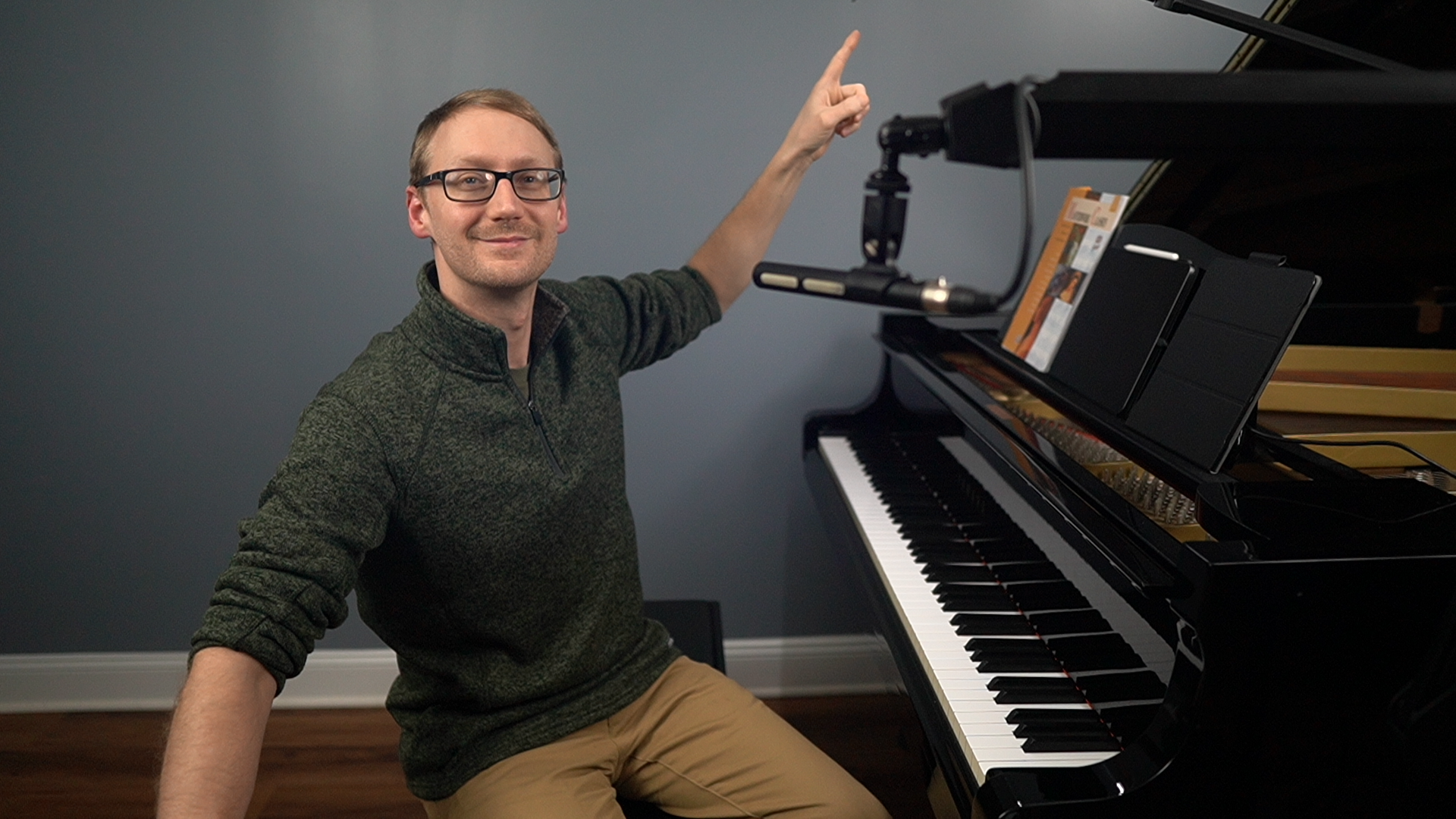
The PianoLight Grand is just out of view in this image.
Unboxing, Setup, & Positioning
The first thing that you will notice about this light is how heavy it is when it’s in the box. This is mostly due to the weighted base. However, the rest of the components are all substantial and feel solidly constructed. Before I opened everything up, I was surprised at how difficult it was to move the box around.
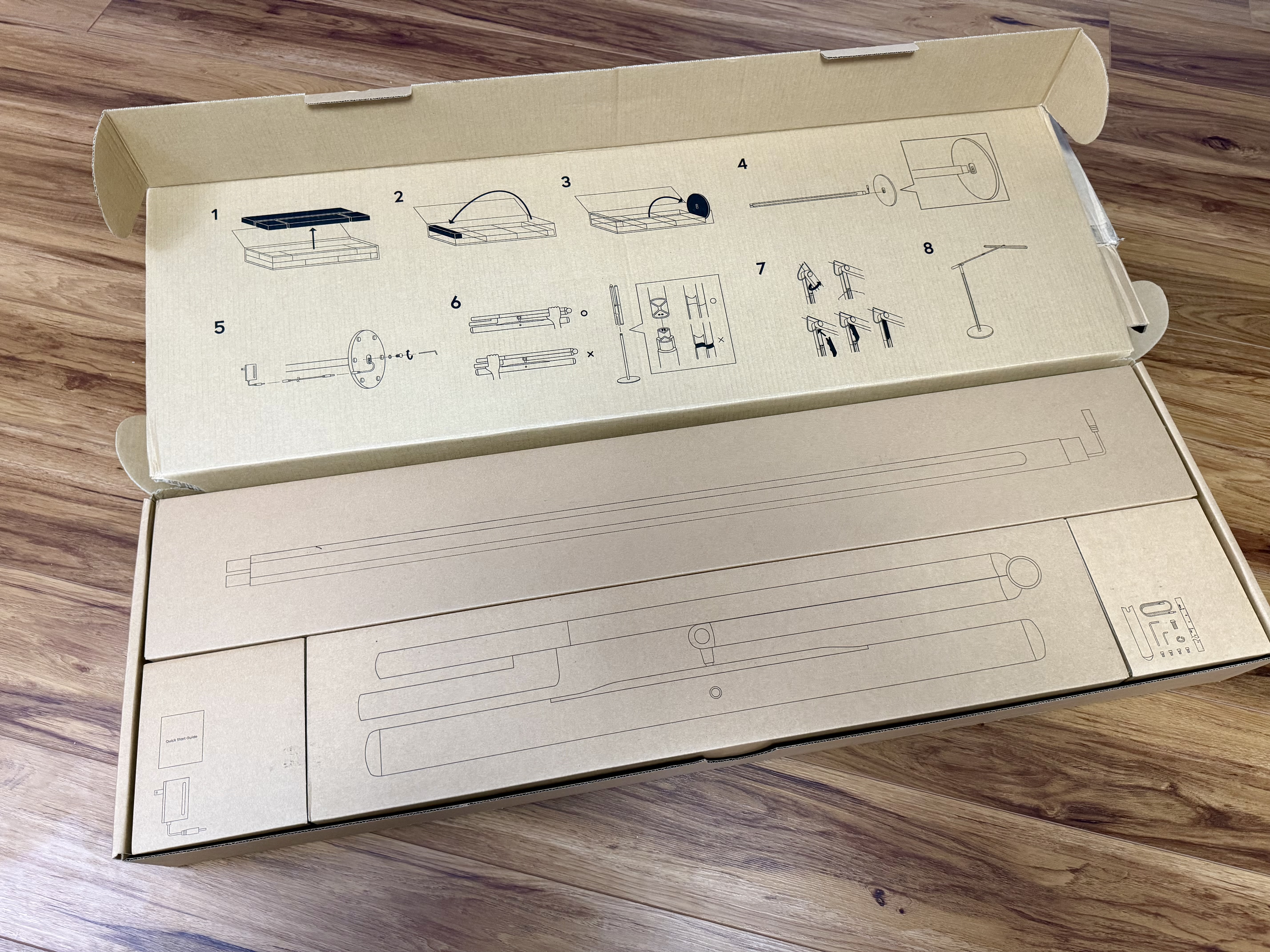
All the components are packed in individual boxes and everything is well organized and easy to find. There are setup instructions printed on the inside of the box along with a quick start guide which is slightly more informative. Everything comes together quickly and easily with the included tools.
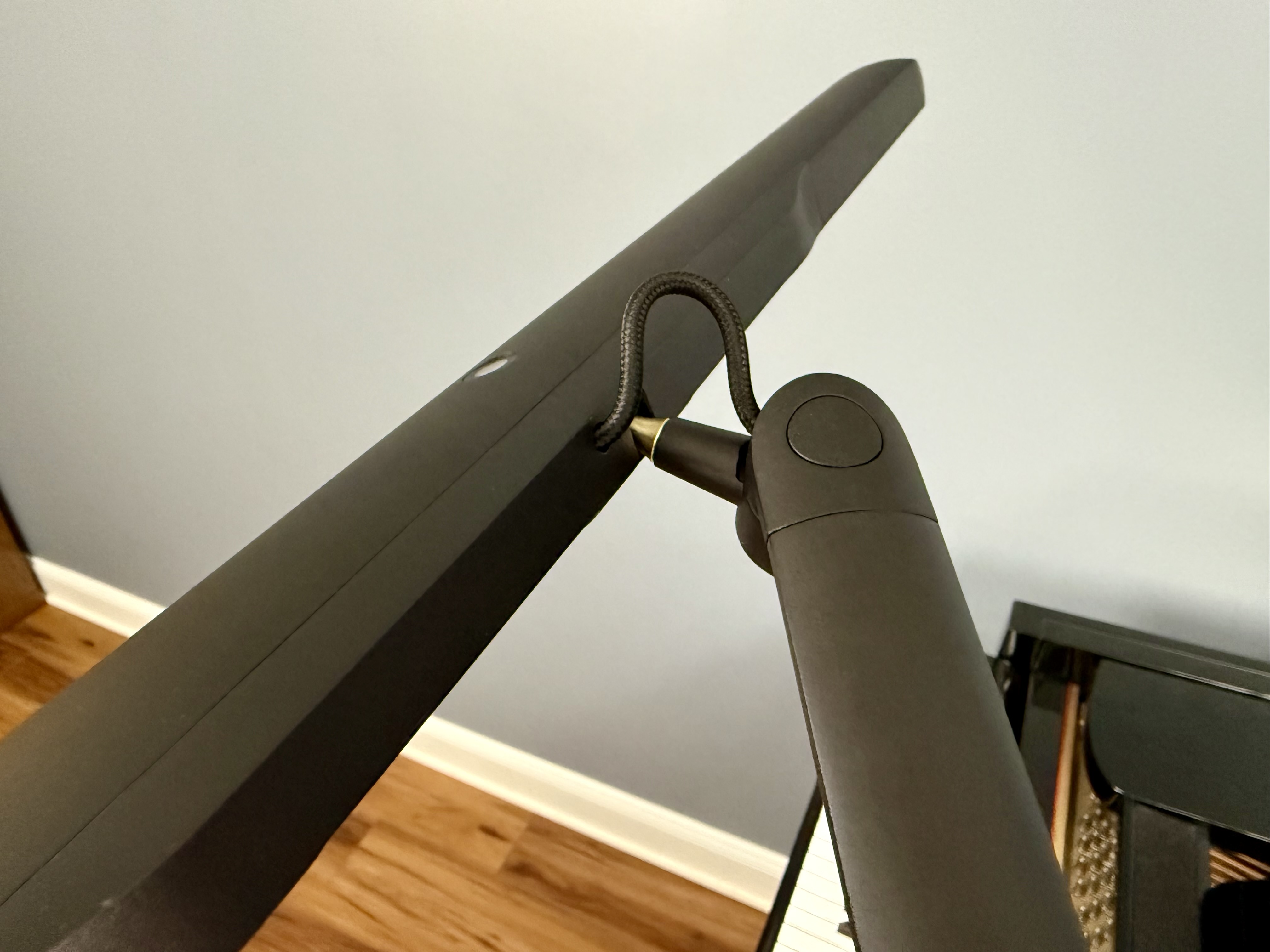
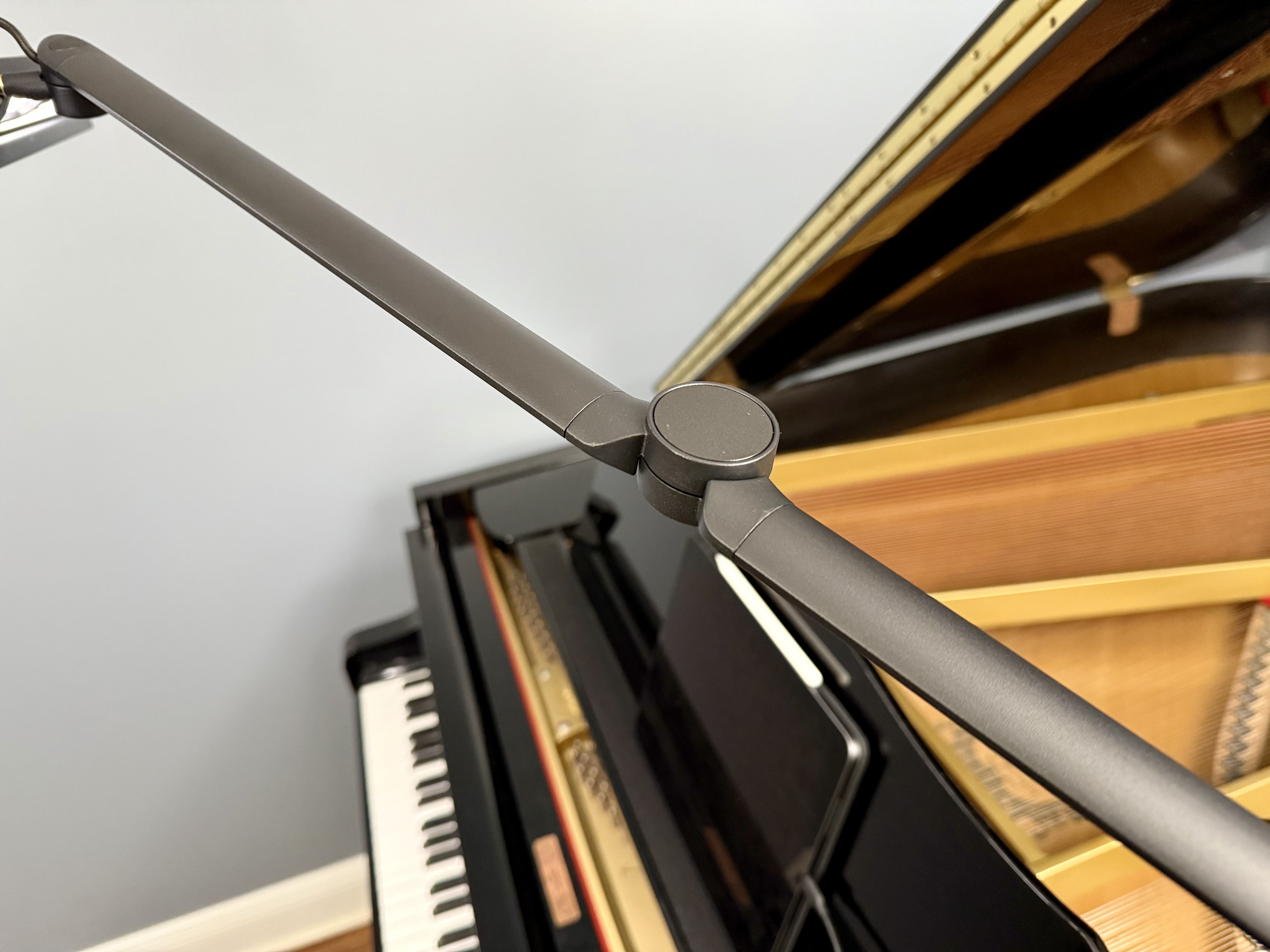
Positioning the light was also relatively straightforward. BenQ advertises the Piano Light Grand as having a five axis design to allow for flexible positioning. Here’s a brief description of what parts of the light can be adjusted:
The entire unit can rotate on its base.
The boom can be adjusted up or down.
The first segment of the boom can folded in or out.
The lamp head uses a ball joint can be adjusted in any direction.
The lamp head can also be rotated independently of the ball joint.
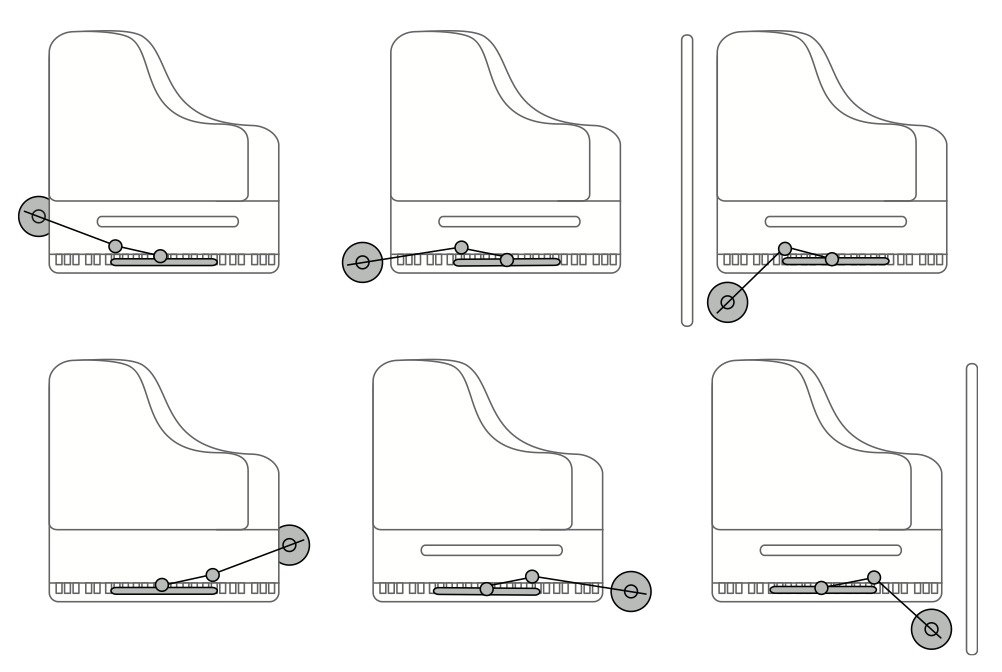
Because of this flexible design, there are several options for placing the base near a piano (see below). Note that it is important to have the lamp head as close to center as possible to achieve the most even light output. It’s also important to place the lamp head at the right height. This is very easy to do using the included paper measuring strip.
Once the lamp is powered on, you can use a built in self-leveling feature to rotate the lamp forward or backward. This feature is helpful because the optimal angle of the lamp does not actually appear to be level from the side. Rather, the lamp appears to point diagonally towards the keys. The leveling feature really helps you to figure this out without much effort.
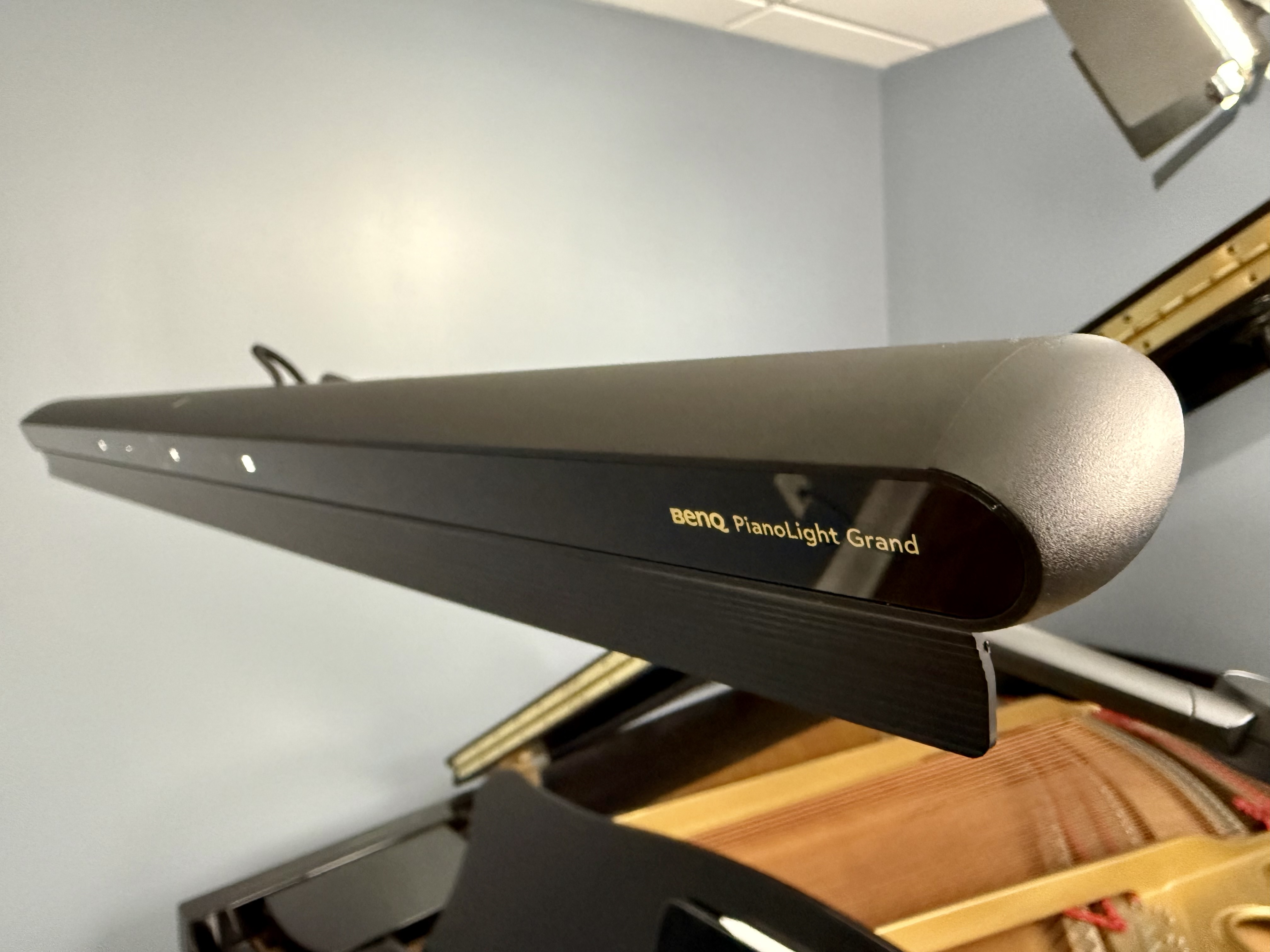
Lastly, you can select from two different lamp shades which block direct view of the light itself when sitting at the piano. Although the narrow lamp shade is suggested for my height, I chose to use the wide shade because my setup requires me to place the lamp slightly higher than what BenQ recommends. The lamp shade slides into the PianoLight and stays in place with a magnetic cover. This is an improvement over their previous design.
Design
The design of the BenQ PianoLight Grand is simple and elegant allowing it to blend in with many different environments. I especially appreciate how minimal the design of the lamp is, and I also appreciate that the color scheme is black with subtle hints of gold, similar to my piano.
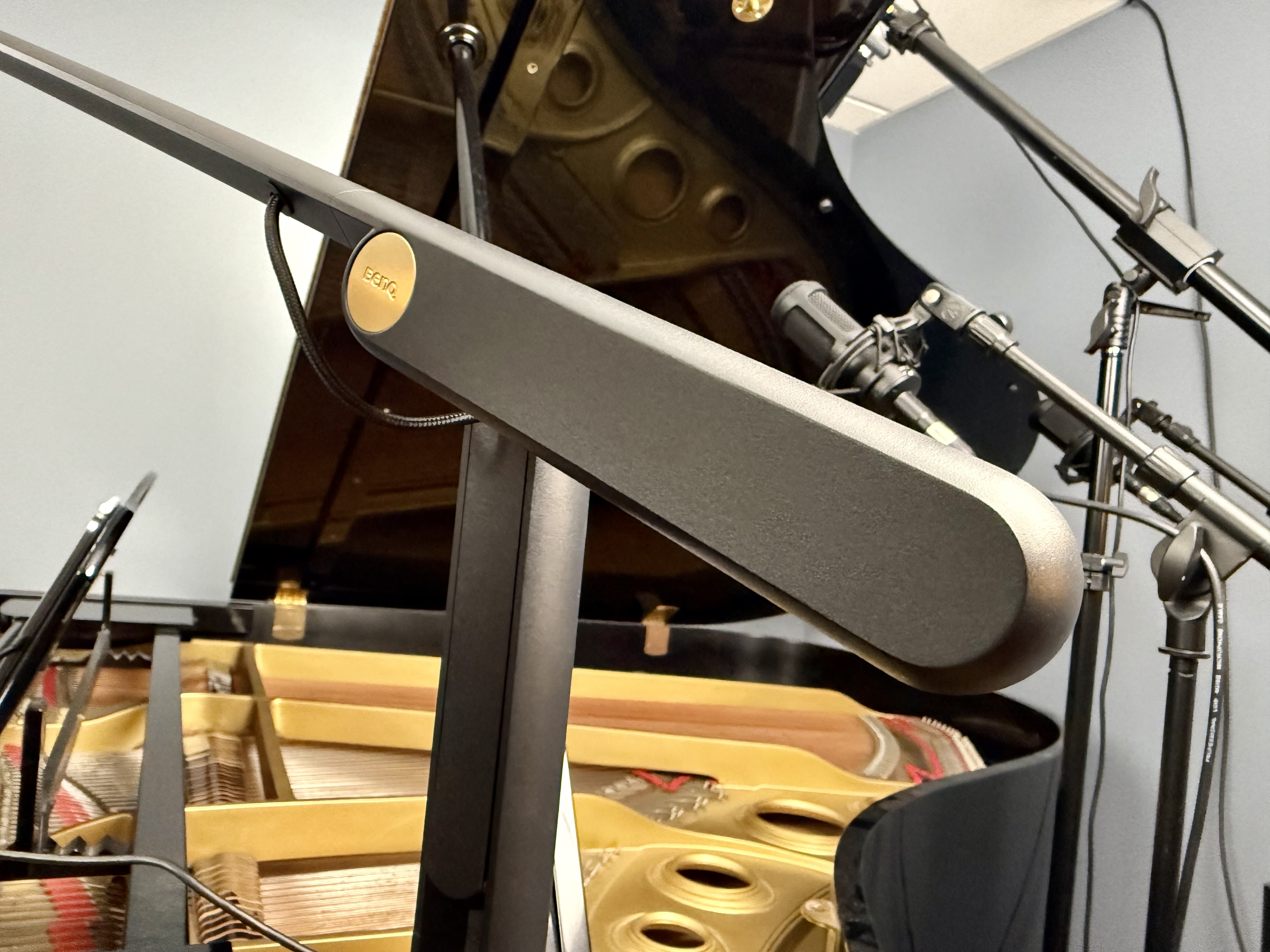
The weighted base has feet that lift the unit off the floor and allows the lamp to rotate freely. The upper portion consists of two adjustable segments with a small counter weight.
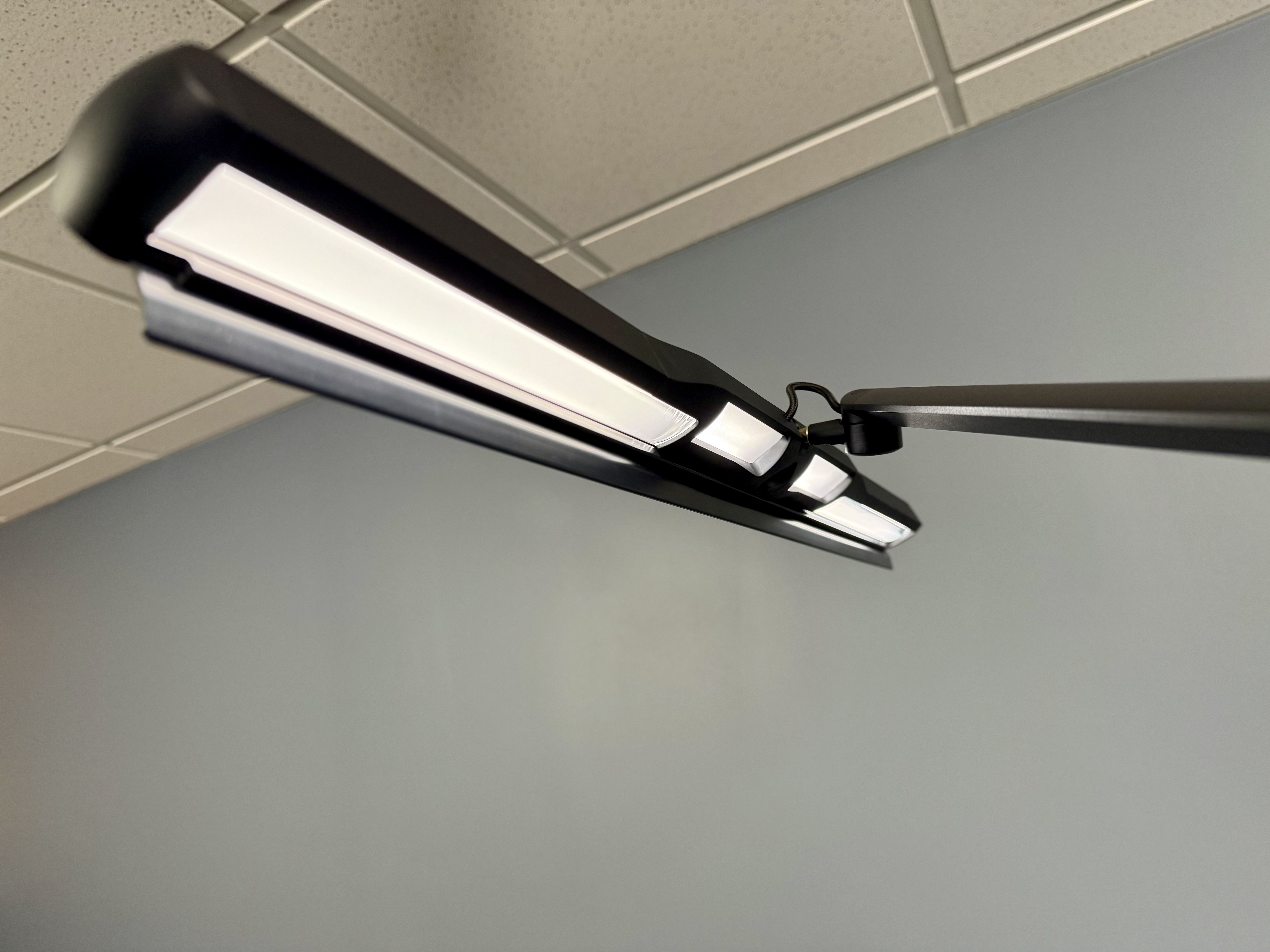
The lamp head has four lighting zones. Two are used for lighting the keyboard, and the other two are directed towards the sheet music. While the lights for the keyboard are always on when the lamp is on, the sheet music lights can be turned off independently.
Features
The PianoLight Grand includes several notable features which will likely be helpful to many different pianists. I will offer a few comments on each of these features below.
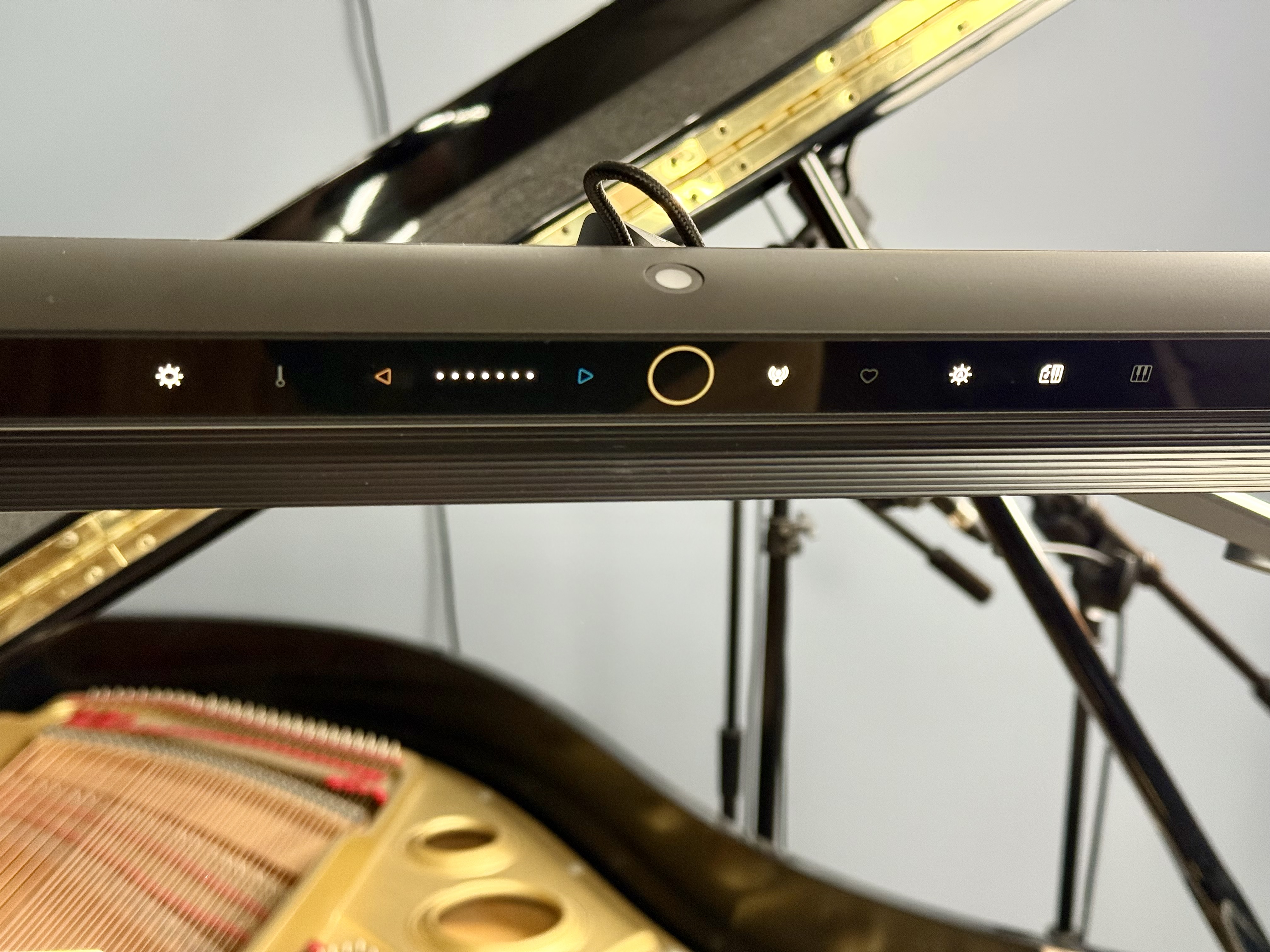
Color temperature: The color temperature can be adjusted from a cool white hue to a warm orange hue. For practicing, I prefer to set the color temperature somewhere in the middle but leaning slightly warm. For video, I use the coolest setting which matches my other lights.
Favorite setting: You can press and hold down the heart icon to save your favorite settings. This includes the brightness, color temperature, and the enabling or disabling of other features. When you press the icon again, your saved settings will be recalled.
Illumination mode: You can disable or enable the music desk light independently of the main light for the keyboard. This is particularly helpful when viewing music on a tablet at higher brightness levels.
Power off setting: This light will restore the previous settings whenever it is unplugged and plugged back in, including whether or not the light was on or off. While this is generally helpful, it is particularly helpful to those who use smart plugs.
Automatic on / off: When you enable this setting, the light will automatically turn on when it detects movement near the keyboard. It will remain on until it no longer detects movement for a period of a few minutes. I find that this feature works very well for my use.
Auto brightness: This light is supposed to automatically sense the ambient light in the room and adjust the brightness level accordingly. However, there is an issue with my unit where the brightness is turned all the way up when I turn on this setting. I am currently waiting on BenQ to comment. I will update this post when I know more.
Wide and Even Illumination
As far as the actual illumination is concerned, the PianoLight Grand delivers. You simply cannot compare something like this to a typical light (or even other grand piano lights). This light features an optical design that focuses and directs the light to the keyboard and the music desk with minimal light spill elsewhere.
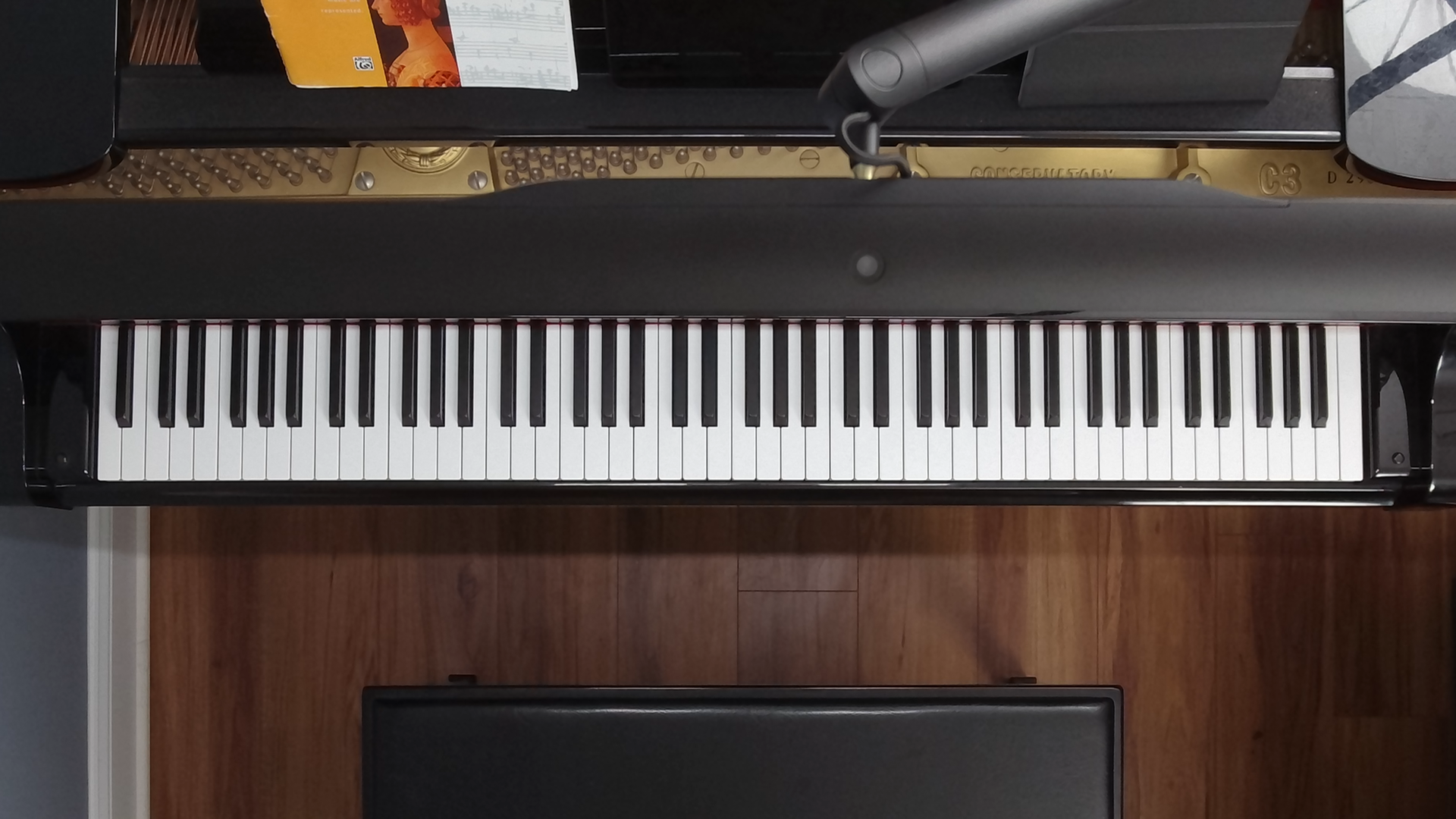
The light is diffused to the point where you cannot see any reflection on the keys, even when looking straight down from the top (as evidenced by my overhead camera). The PianoLight is described as emitting enough light to illuminate each key on a piano to a brightness level of at least 300 lux.
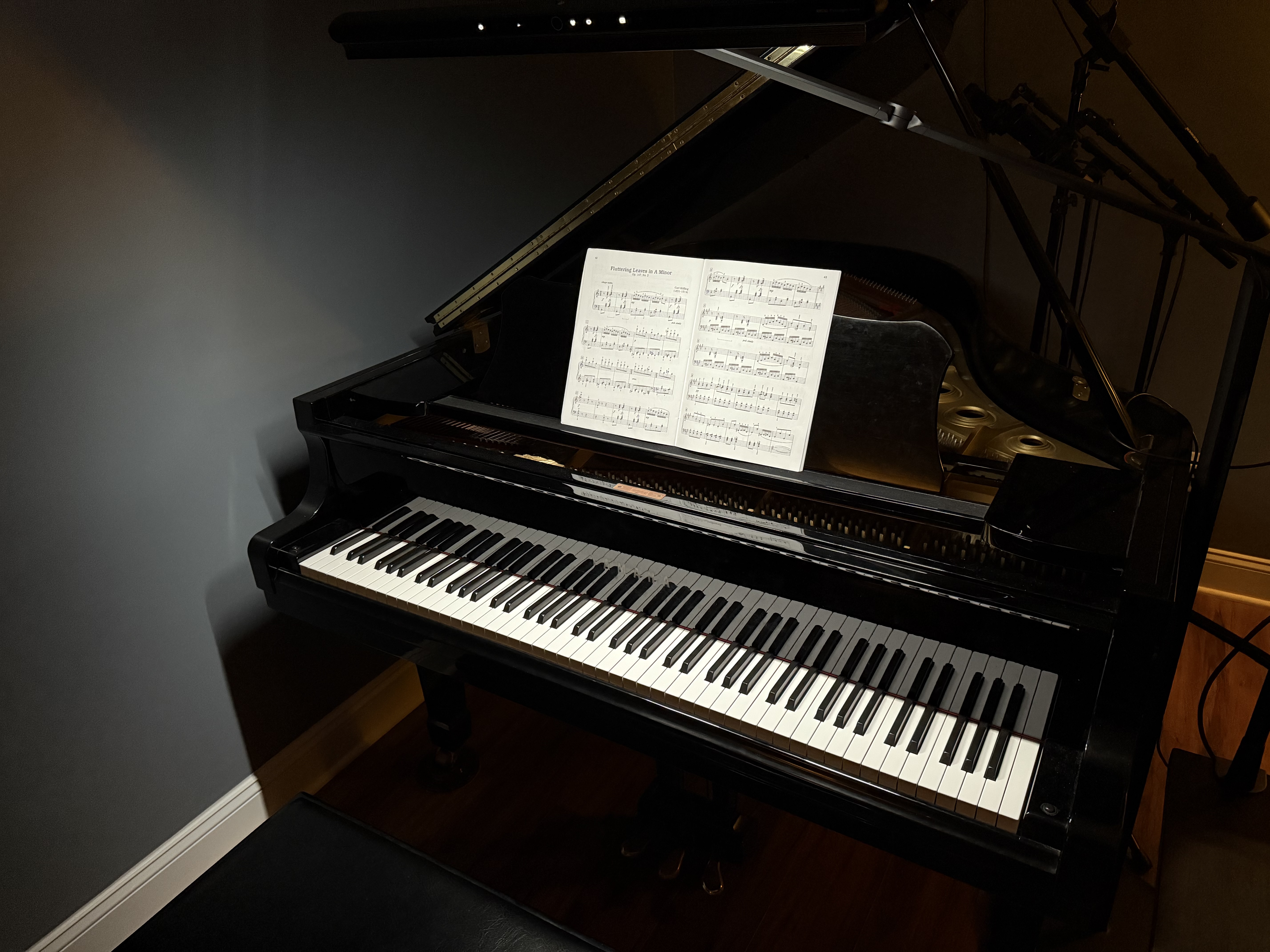
Another thing worth mentioning is that this light is able to reach very low brightness levels in addition to getting super bright. This is particularly relevant to me since I use cameras with lenses that are very sensitive to light. Most other lights will either illuminate the keys unevenly or they will blow out the image. However, this light makes a noticeable improvement to my video quality while still maintaining clarity and detail in all parts of the keyboard, thanks to its low minimum brightness level.
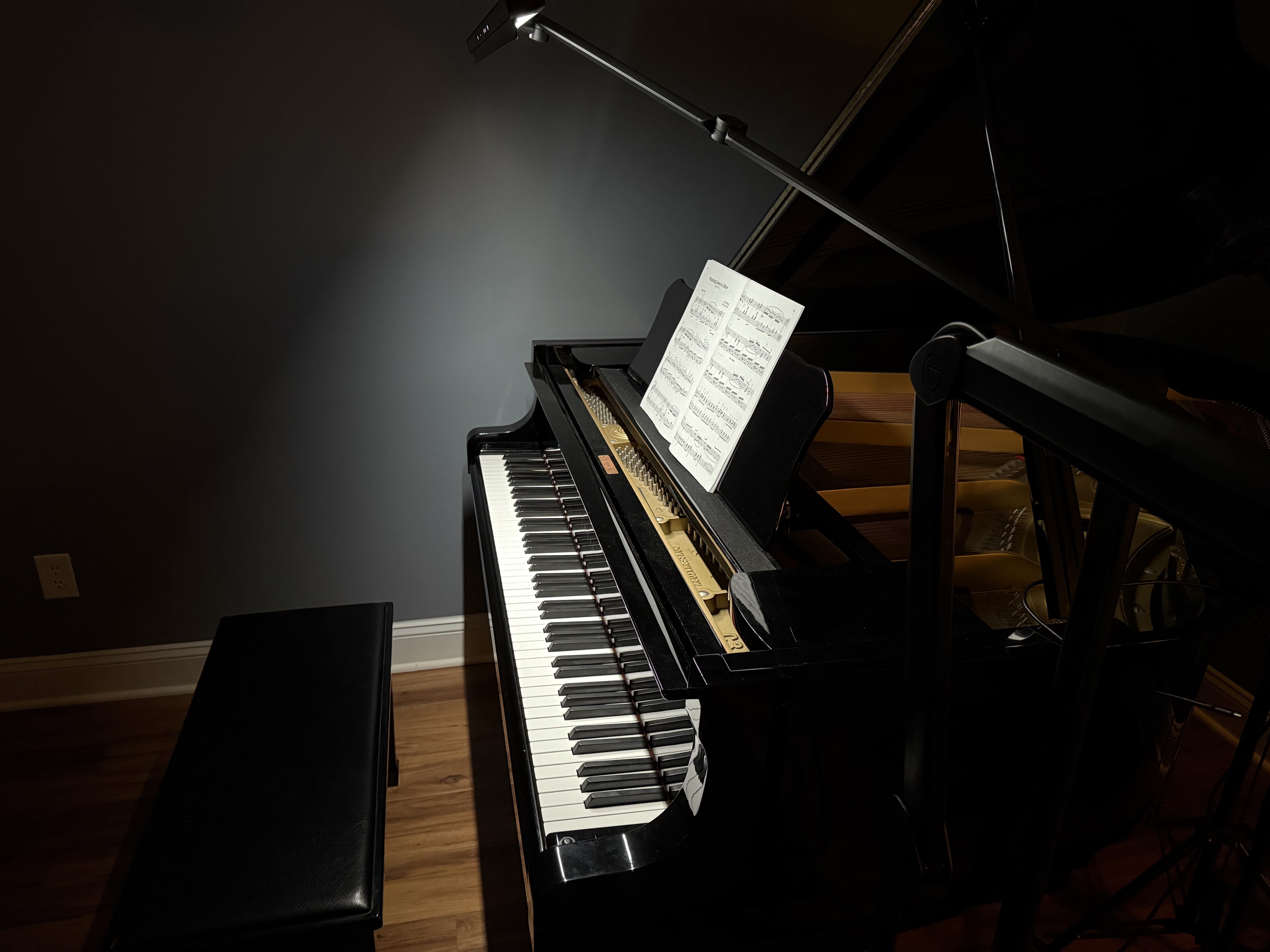
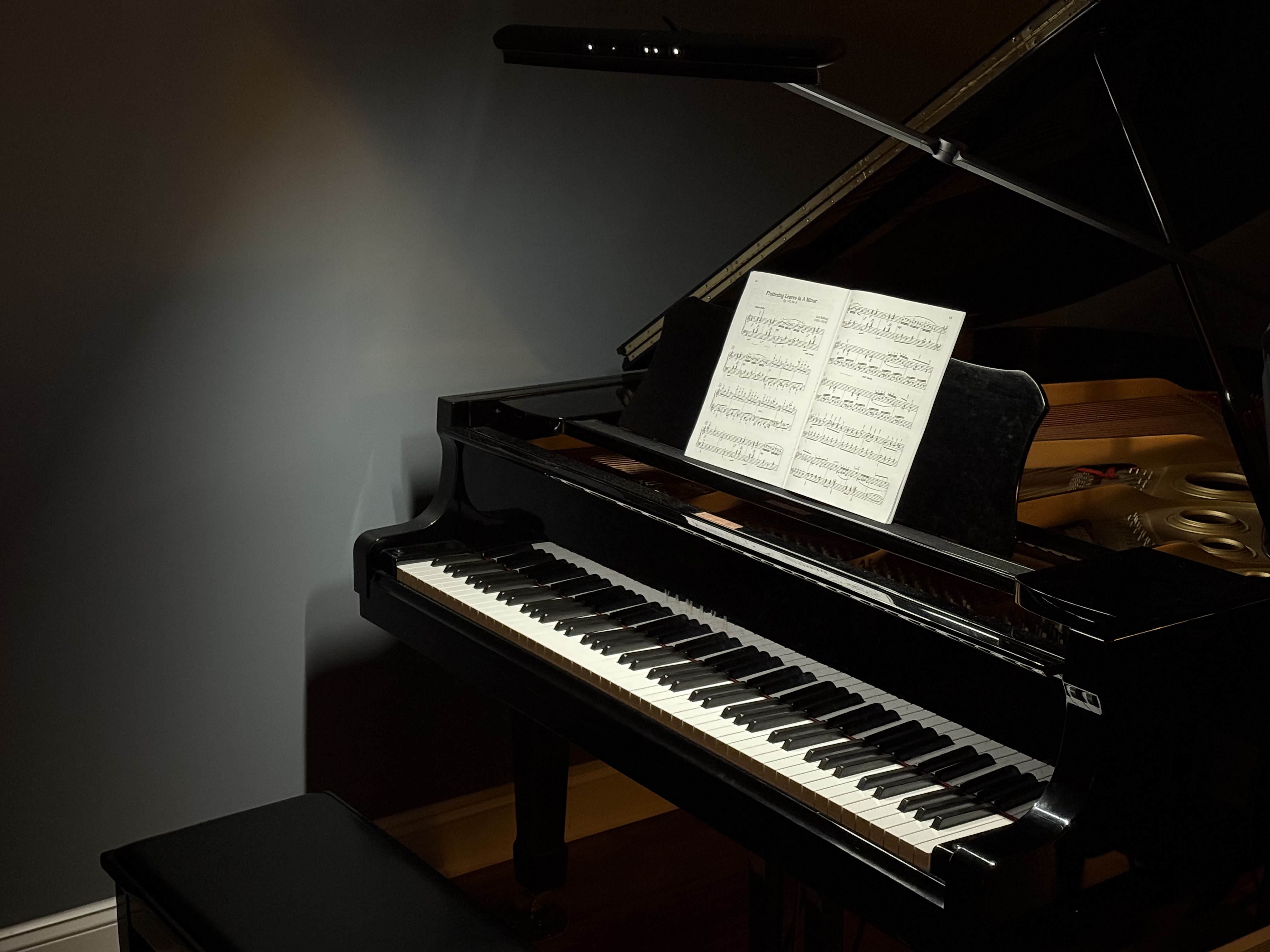
Also, when I am practicing and studying music, I like to turn down the ambient lights in the room and focus on my piano music. Since this light can reach such a low level, I find it particularly comfortable to use in this situation. This is because the keyboard and music desk are evenly but dimly illuminated, and everything else is dark. It’s really nice! Of course, if I want to feel like I am in a concert hall with a bright light focused on the piano and the music, this light does a great job with that as well.
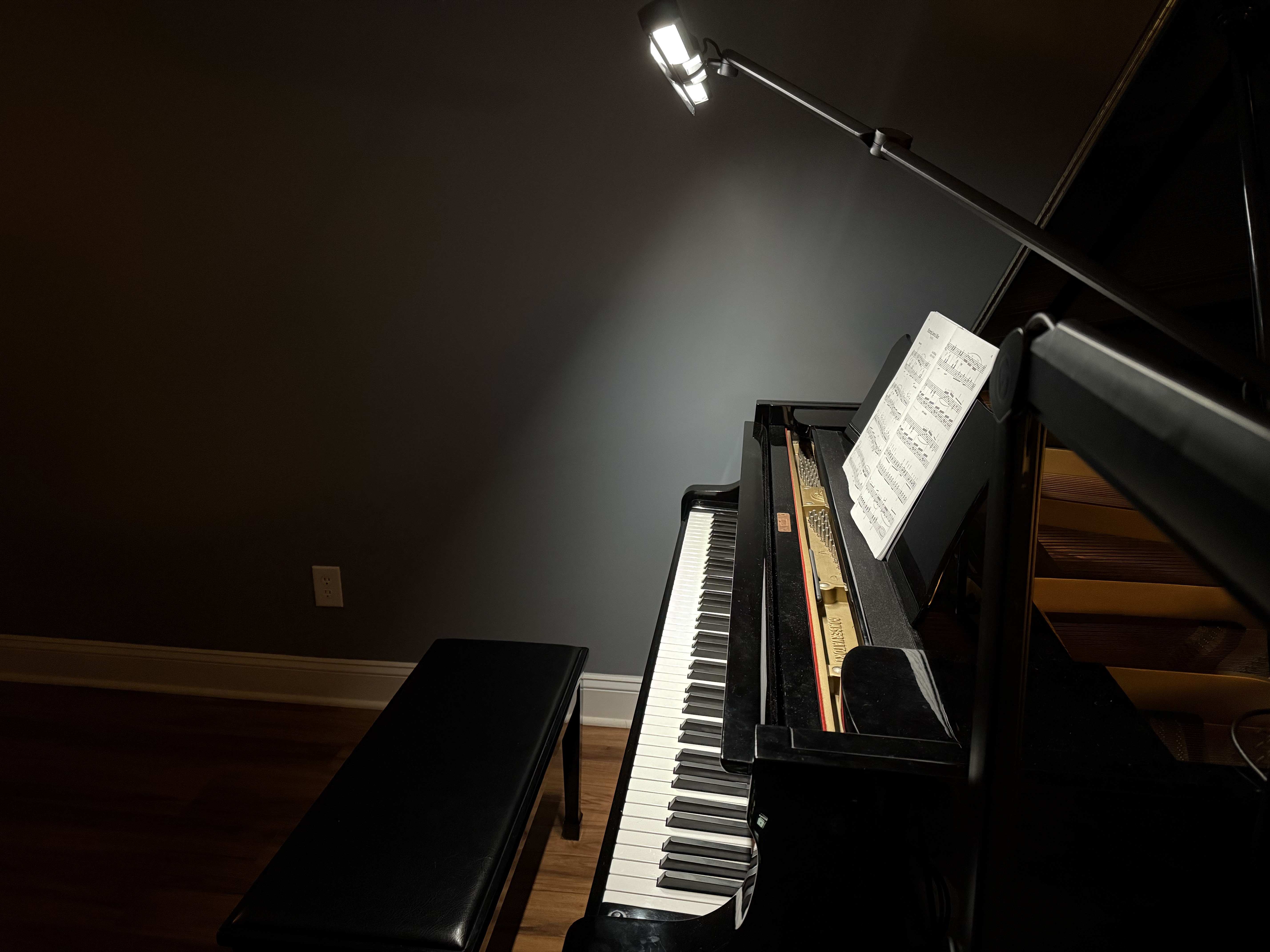
Lastly, it’s important to mention that typical LED lights flicker very fast to maintain their illumination. While this is generally not discernible to most people, it is discernible on camera and some people are also sensitive to it (like me). The PianoLight Grand employs a flicker-free illumination technology, ensuring that it does not flicker at all, even on camera. This light is not only suitable for use on camera but also significantly more comfortable to use compared to a typical LED light, especially for those sensitive to flickering.
Who This Light is For?
Now that you know all about the PianoLight Grand, you might wonder if I recommend it, especially given the price. All things considered, I do recommend this product. I really don’t think it’s that expensive compared to other quality floor lamps, especially those designed to be used by a grand piano. This light performs significantly better compared to other lights and comes in a very minimal and aesthetically pleasing package.
It’s worth mentioning that I would have purchased this lamp immediately even if I had to pay full price. In many ways, it exceeded my expectations. To me, the most important feature of this lamp is the fact that it evenly lights the keyboard even at a low brightness setting. The even lighting, low minimum brightness level, and excellent diffusion make this light best in class for anyone who is teaching online or creating video content for the piano.
As to who this light is for, I really think anyone with any type of piano can benefit. This is even more true for those who own a grand piano, as grand pianos are generally more difficult to light properly and require a more substantial light. For those who create video content for the piano or teach online, the PianoLight Grand is the best light that I am aware of. Considering the price, durability, and feature set, this purchase strikes me as a “buy it once” sort of item.
I hope you found my observations useful and informative, especially if you are considering purchasing the PianoLight Grand for yourself. If you have any questions or comments, please leave them below and I will be glad to help you out. Thanks for reading!
Helpful Resources
Whether you're starting out or you’ve been playing for a while, you'll find something here to help!
Flex Lessons Piano Academy
Free Beginner Reading Course
Piano Level Assessment
Hi! I'm Joseph.
I created Flex Lessons to bring classical piano education into the 21st century.
I am a classically-trained pianist and organist who specializes in teaching online. I've been teaching professionally since 2011 and I particularly enjoy working with adult piano students.
You can read more about me here.